


Go hiking, take in the views, and make climbing history! No matter what you're looking for, Patagonia has it all.
Travelers can expect to find mirror-smooth lakes, turquoise water, and endless expanses. We're familiar with this windswept land from pictures, films, social media, and now, Riders on the Storm.
Eager to see it with my own eyes, I set off alone during my year abroad in Chile. The bus took us to Puerto Natales, the starting point for excursions to Torres del Paine National Park. A Chilean man sat next to me. We talked about the weather—what else? In Patagonia, this is anything but a small talk topic. He told me about winter storms so violent that children aren't allowed outside alone and ropes are stretched across the streets. Whether or not that's true, one thing is clear: It's April, and there's little hope for good weather anymore.
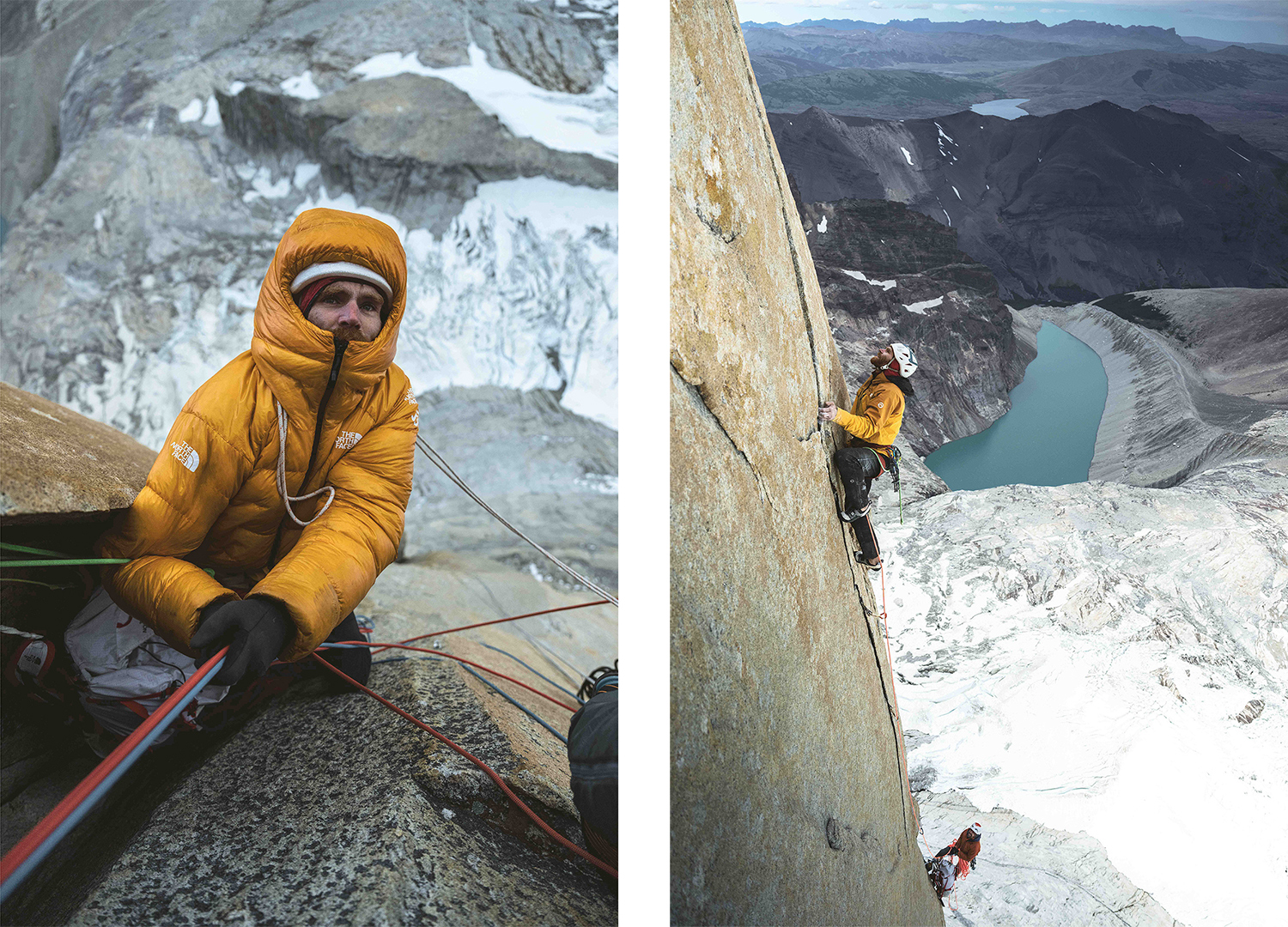
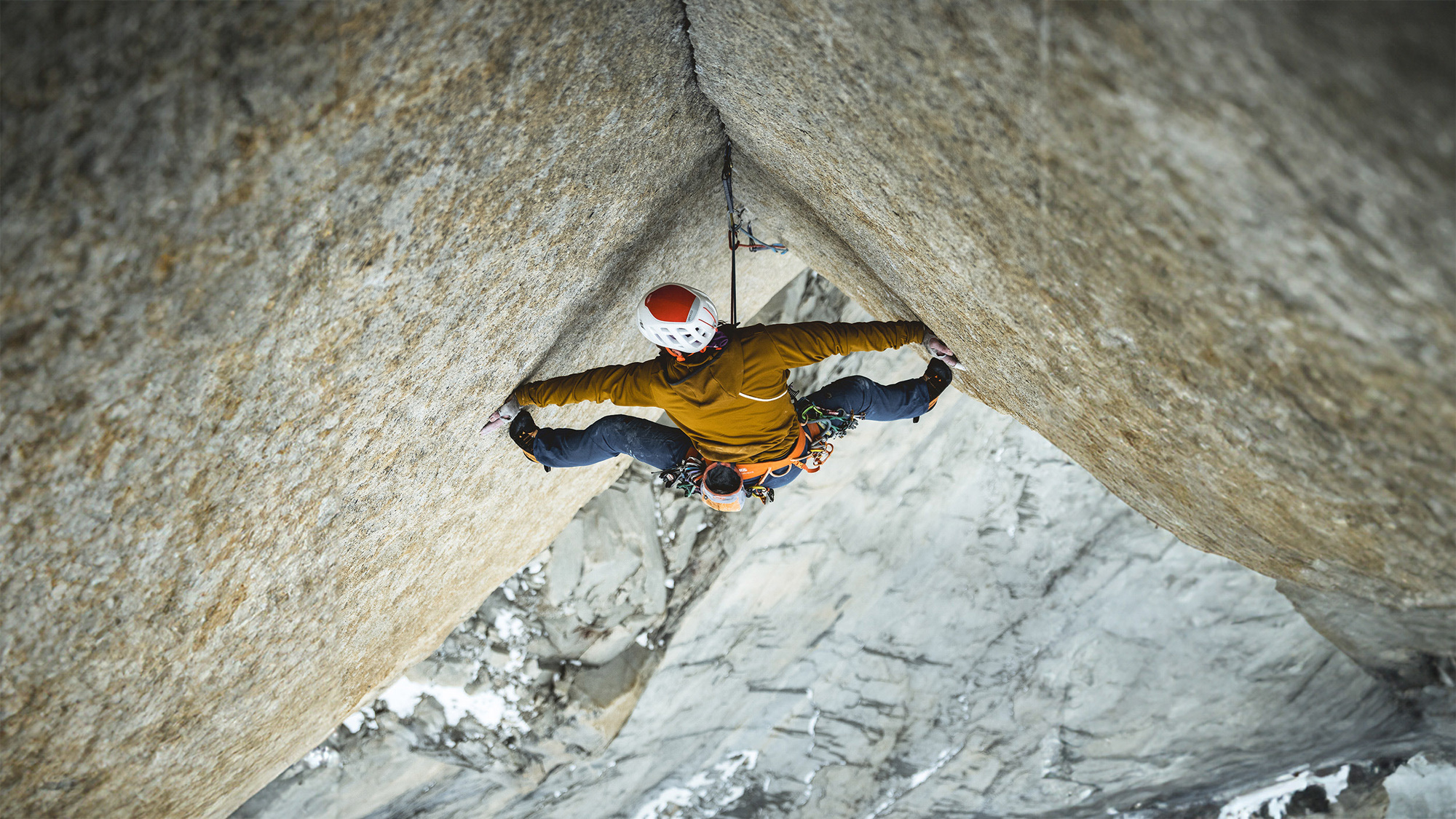
In the film, Belgian climbers Sean Villanueva O'Driscoll, Nico Favresse, and Siebe Vanhee were more fortunate. In January 2024, the three climbers were traveling in Patagonia with their American colleague, Drew Smith. However, the weather was not kind to them. "We struggled with the conditions the whole time. It was quite a masochistic experience," Nico said. "It took us 18 days to free climb the route. In good weather, we could have done it in three days."
Sleeping, climbing, eating, reading, and listening to music. What more could you want?
Nico Favresse
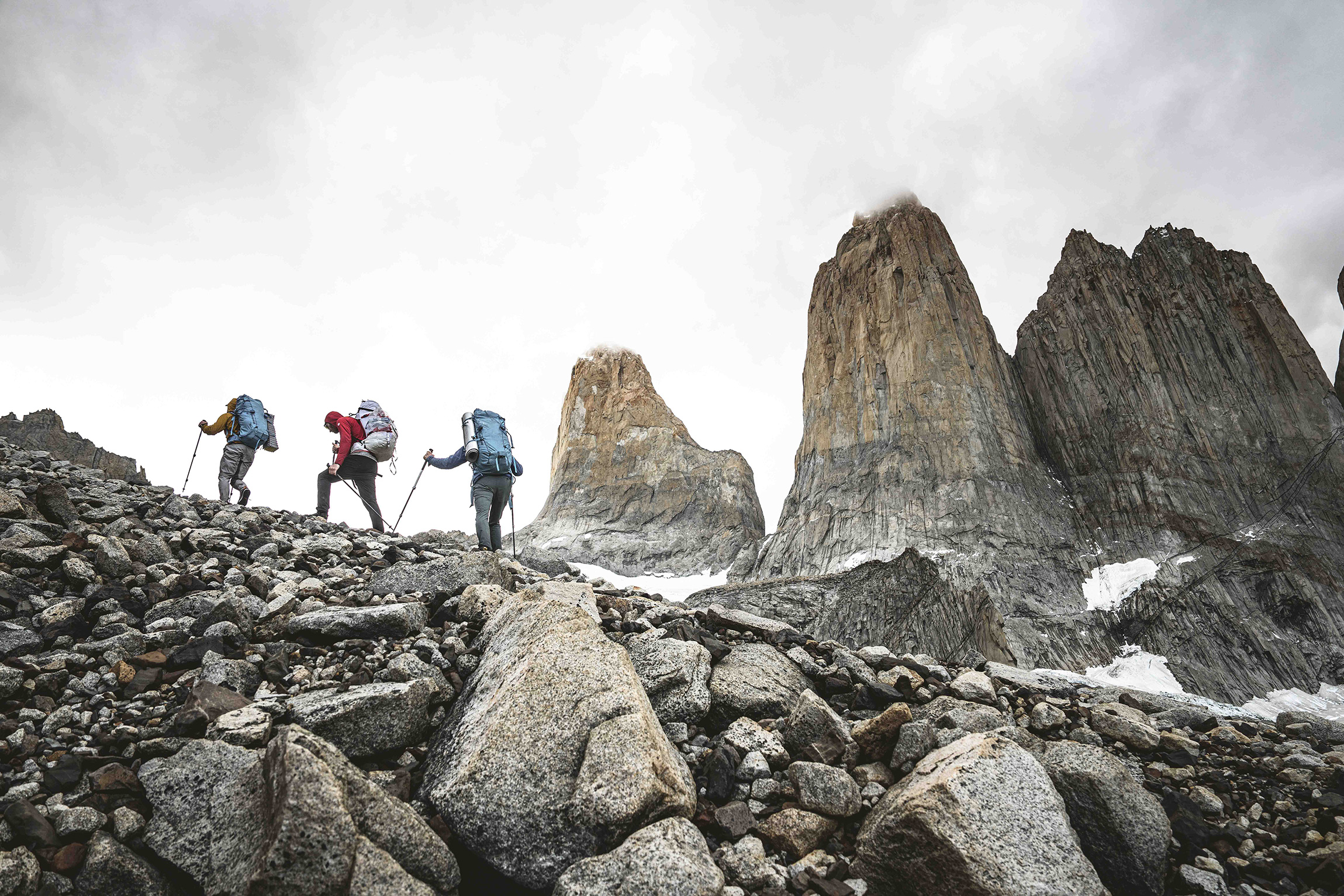
It took me four days to complete the classic W hike to the viewpoint. Finally, I stood before Los Tres Torres, the three towers that climbers write legends about. Los Tres Torres are the three towers that climbers write legends about. Torre Central, the middle tower, rises steeply with 41 pitches and a 1,200-meter wall. That's where our four climbers wanted to go. However, the starting point was still far away. While there is hardly any wind in the sheltered basin where I am standing, the east side is one of the most brutal weather zones in the massif.
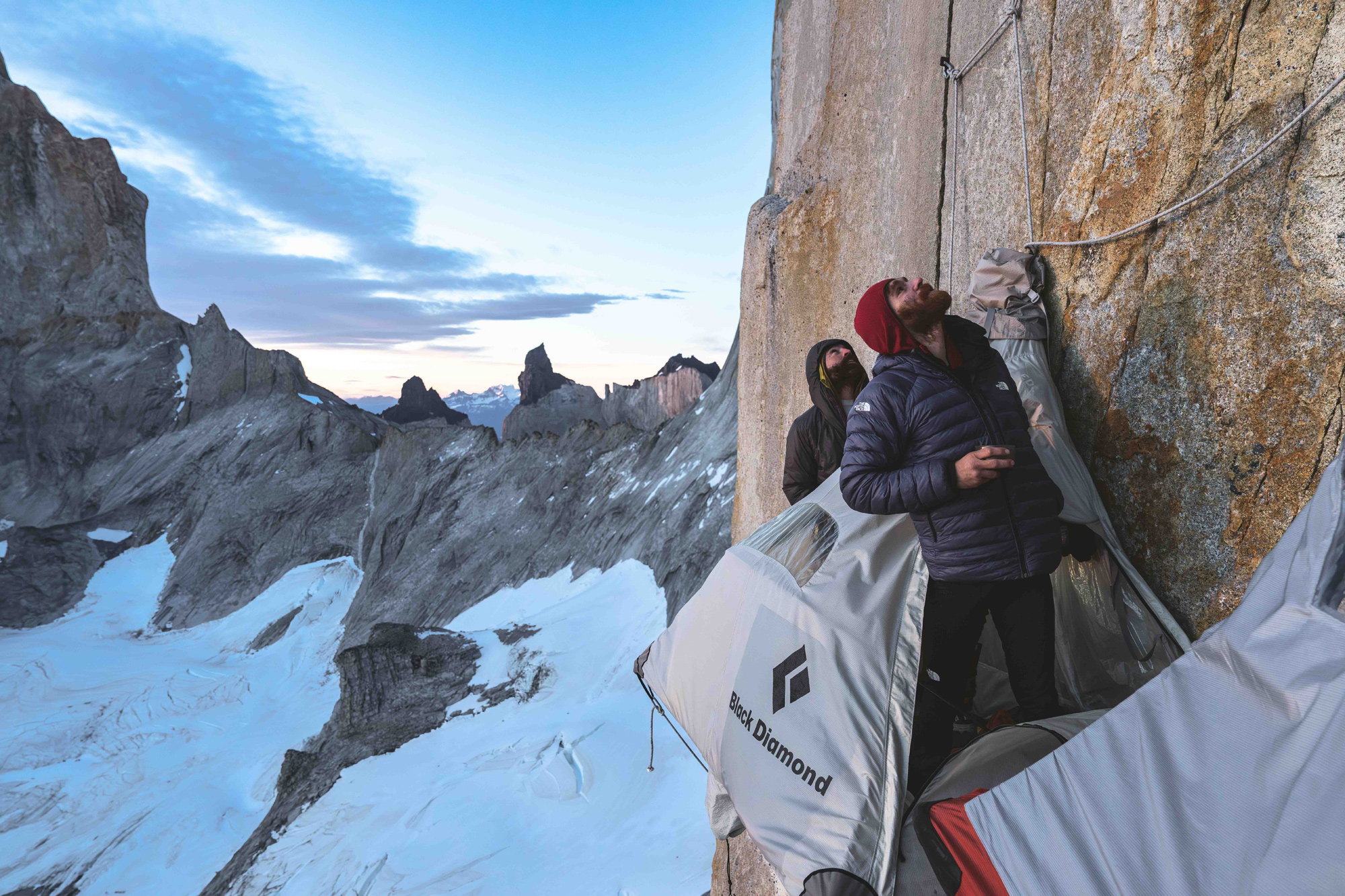
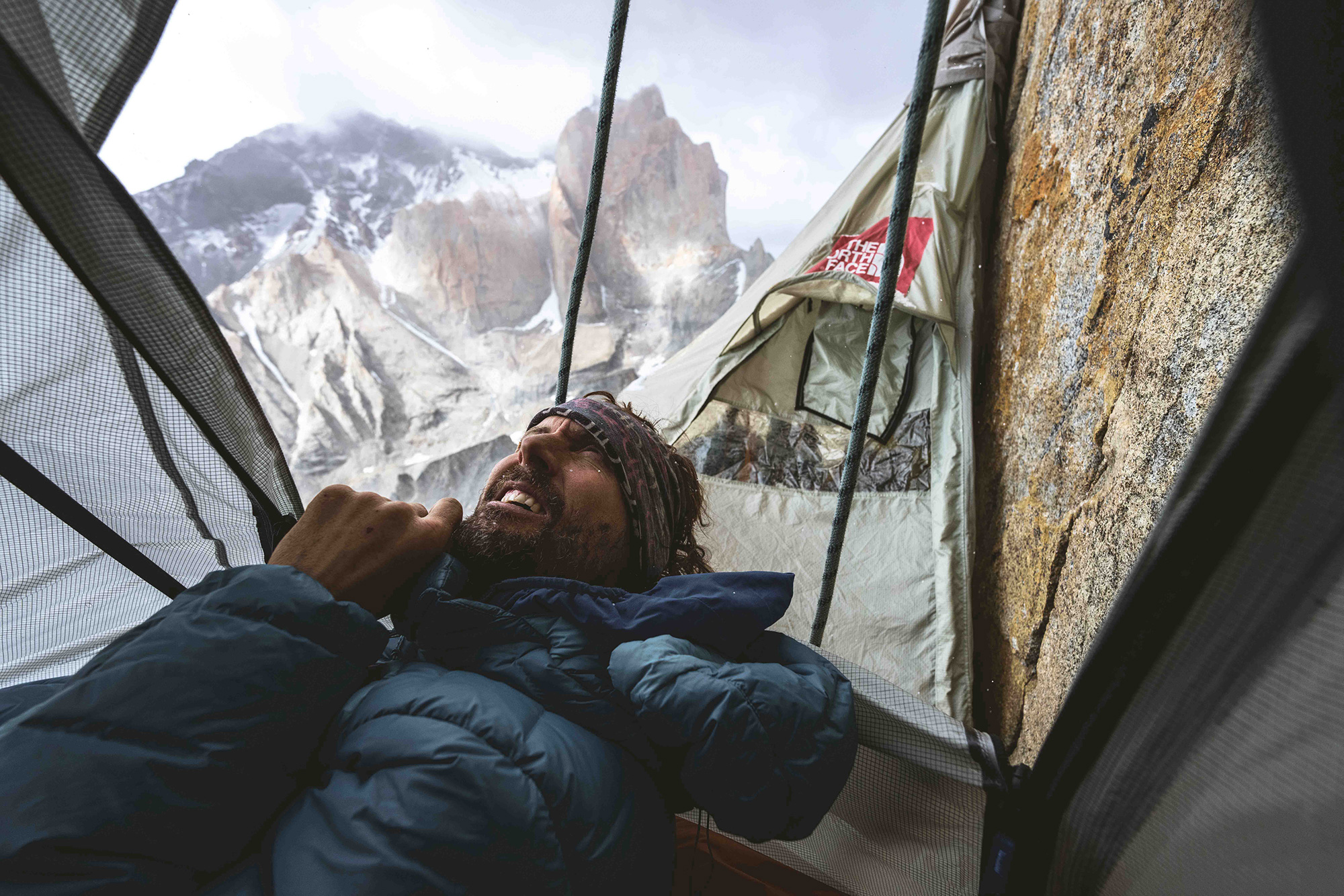
"The crux was definitely the weather—it always is in Patagonia," Siebe recalls. "The climbing isn't extremely difficult, but climbing a 7c route in temperatures below freezing with ice in the cracks requires a completely different mindset." Wet conditions. Rockfall. Sub-zero temperatures. Winds gusting at 140 km/h shook everything. The snow was a meter high on their portaledge. Add to that the discomfort of having numb fingers and ice-cold feet.
It was just a single message: "Hey guys, I want to try free climbing Riders. Are you ready for another ordeal?"
Siebe Vanhee
Why all this? What keeps you going? "On my own, I definitely would have given up," Nico says. "But with this team, I was able to surpass myself." Drew, the expedition's photographer and cameraman, adds: "The guys said we were lucky, but I don't think we were. Thanks to the team's energy, we reached the summit long before we actually stood on top." They reached the summit on February 9, 2024, 18 years after Nico and Sean first arrived.
Belgian mountains and big ambitions
Sean, Nico, and Siebe come from Belgium—at first glance, not a classic alpine country.
Belgium's highest mountain, the Signal de Botrange, was artificially raised to 700 meters above sea level by filling in a hill. However, Belgium has a long climbing tradition. King Albert I, also known as the "Roi Alpiniste," was a passionate mountaineer and promoter of the sport until he lost his life climbing alone. For Nico, climbing in Freyr—an area that has produced many strong climbers—was also formative. He says, "It's slippery, technical, and unforgiving here, with wide distances between hooks. If you can climb well there, you can climb anywhere.” Added to this is a strict climbing ethic. "You had to earn the right to attempt difficult routes," says Siebe. "When I attempted my first 8a, there was no rope attached from above. I had to climb the entire route myself, from bolt to bolt."
Not all climbing styles are the same
Often, climbers repeat their impressive feats because they didn't manage to free climb the route the first time. But what does that actually mean?
In free climbing, you can only use your hands and feet to propel yourself forward on the rock. Ropes and hooks are only used for safety. At Riders on the Storm, the team climbed in free style, with at least one team member free climbing each pitch. They decided who would take which route by playing rock-paper-scissors. "That worked really well—we all got difficult routes," Nico recalls. They climbed in capsule style, using portaledges on the wall. This allows rappelling to tackle individual pitches again. It can be confusing for spectators, but it is a legitimate big wall style.